Inside the Connected Patient Room: How Hospital Rooms Are Evolving to Support Tomorrow’s Care
Healthcare is rapidly evolving, and nowhere is this transformation more visible than inside the connected patient room. As hospitals look to the future, we asked our experts where health systems are focusing today to help prepare for tomorrow’s care — and how they can plan for it effectively.
What is a Connected Patient Room?
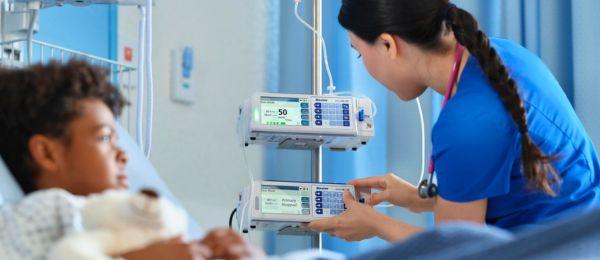
A connected or smart hospital room is a modern care setting equipped with technology designed to help support care coordination, efficient workflows and patient engagement. While traditional hospital rooms also feature many types of technology, a connected room goes farther — often featuring modern solutions like virtual nursing support, digital patient engagement tools, voice-activated controls and more.
How Smart is Your Hospital Room?Here are a few examples of potential differences between traditional and smart hospital rooms:
|
What Could the Future Hold for Patient Rooms?
Like any innovation, these rooms will evolve in response to the most prevalent challenges in healthcare. How, then, will the future of connected patient rooms benefit health systems, care teams and patients?
#1. Smart Hospital Rooms Will Help Address the Nursing Shortage
The Health Resources and Services Administration projects a shortage of 63,720 full-time RNs by 2030.1 To help support busy care teams in these challenging conditions, connected patient rooms will be designed to help ease their burden. Already, many hospitals are rolling out technology ranging from virtual nursing offerings to workflow automation designed to help nurses spend more time at the bedside.
#2. Connected Patient Rooms Will Enable Virtual Nursing
A 2024 survey showed that 74% of hospital leaders believe virtual nursing is or will become integral to care delivery models in acute inpatient care — up from 66% in 2023.2 In a smart room setup, this may involve cameras, speakers, monitors and bedside devices that help virtual nurses remotely assist with tasks like patient monitoring, education, admission, discharge and more.3 As staffing shortages persist, virtual nursing support will play an even more important role in supporting both patients and care teams.
#3. Connected Hospital Rooms Will Give More Power to the Patient
Driven by both caregiver shortages and patients’ evolving expectations, tomorrow’s hospital rooms will enable patients to have more control over their comfort, care and environment. Digital patient engagement solutions are already available to support the patient experience with personalized education, order meals, view on-demand entertainment and much more.4
How Can You Add More Intelligence to Your Hospital Rooms?

Though there are still many unknowns, you can start planning for the future of connected patient rooms now. What’s the best way to get started? A common theme emerged amongst our experts: to prepare for tomorrow’s smart room technology, focus on the fundamentals today.

|
Decide what problem you are trying to solve. |
“The biggest thing is to recognize that you’re not going to be able to do everything at once,” says Najia Khawar, Senior Director, Project Management Office. “Whether you’re focused on improving the patient experience, supporting fall prevention or something else, start by deciding what your top strategic priorities are, then back technology into them.”

|
Standardize smart room technology to support floating caregivers. |
As nursing shortages continue, hospitals will rely on float pools or per-diem nurses to fill the gap. Standardizing the solutions they use throughout their shifts can go a long way in bringing these temporary care team members up to speed quickly. “It may be as simple as knowing what a certain dome light color means outside a patient door,” says Mary Reagan-Zingler BSN, RN, Senior Manager, Enterprise Strategy & Informatics. “When the standards are the same across facilities, visiting nurses can spend less time training and more time caring for patients.”

|
Shore up your health system’s IT infrastructure now. |
Before layering on new technology systems, make sure you have the core components in place — and up to date — to support them. “It’s a shame to see hospitals install a new system and then run into issues because of something preventable like an outdated wireless network,” says Khawar. “When you prioritize that infrastructure today, you can not only be ready for new smart room technology investments tomorrow, but you can make those roll-outs smoother and more cost-effective.”

|
Make the most of your current patient rooms. |
Quick wins can be hard to come by in healthcare, but a good place to start is by finding out whether you’re fully leveraging the technology you already have. “A few simple questions may uncover major opportunities,” notes Khawar. “Are you using all the reporting capabilities a system offers? Have you turned on optional monitoring features? Clinicians are busy, and it’s easy for them to overlook features that could help them. Start by fully operationalizing the technology you have before you layer more onto it.”

|
Prioritize your care teams. |
Consider the unique make-up of your team, and how connected patient room technology might support it. “The nursing profession is increasingly multigenerational, and different generations may benefit from different types of support,” says Reagan-Zingler. “More seasoned nurses may be more comfortable with bedside care, while younger nurses may be more comfortable with technology. If you can find solutions to address their different needs, you can make a major impact on their effectiveness — and your bottom line.”
Today and Tomorrow, People Come First
Whatever the connected patient room of the future looks like, there is one priority we all share: the people inside it.
“All the technology in the world will never replace caregivers,” points out Reagan-Zingler. “There are so many ways connected patient rooms can make care more effective, and we’re here for all of them — but we will always prioritize the human being delivering the care to the human being who needs it. That’s the point of all of this.”
Featured Contributors

Najia Khawar, Senior Director, Baxter Project Management Office | Baxter
At Baxter, Najia leads a national PMO overseeing complex healthcare technology deployments across hospitals and health systems. With over 15 years of experience in healthcare operations and digital transformation, she specializes in… Read Full Bio

Mary Reagan-Zingler, Sr. Manager Enterprise Strategy & Informatics | Baxter
Prior to joining Baxter, Mary worked as a Registered Nurse in the ICU, ER and Surgery at the University of Wisconsin for over 23 years. She then spent 14 years at other med tech companies holding positions in… Read Full Bio